
Strong marketing starts with clear direction, not simply more activity. Marketing consulting in Saudi Arabia involves assessing a business’s position, studying its market and audience, and turning those findings into strategic recommendations and practical plans. The aim is to connect marketing choices with business goals, available budget, and measurable priorities.
Choosing a partner is a significant decision, especially when a strategy needs to reflect the realities of Saudi Arabia and the wider GCC. This guide explains what marketing consulting includes, how to assess a company’s fit, and how sector experience and thorough market audits can support better decisions. It also shows how to move from insight to implementation, giving you a clearer basis for choosing the support your business needs.
• Match sector experience to your growth priorities, audience, and operating context across Saudi Arabia and the GCC.
• Before selecting a consulting partner, define the outcomes you need and assess whether its approach connects recommendations to execution.
• Use a market and competitor audit to surface opportunities, sharpen positioning, and guide decisions with audience and market data.
• Consider how strategic advisory, media, SEO/SEM, or branding can address the specific gap holding your marketing back.
Saudi Arabia’s Vision 2030 digital transformation is creating new opportunities for businesses. Companies are investing more heavily in digital marketing, while a large demographic spends significant time online each day. Sector experience helps translate these shifts into relevant priorities. A consultant needs to understand how a business earns attention, builds trust, and converts demand within its category. That context shapes the message, channel choices, and measures used to assess growth.
Different sectors need different starting points. A retailer, for example, may need to connect product discovery with a clear path to purchase. A professional services firm may need to explain its expertise and distinguish its offer. These examples show why a generic plan can miss important differences. Audience expectations, buying journeys, and the role of social media vary by business model. Industry familiarity helps identify those differences before they shape campaign development.
Assess sector experience through the proposed process, not just a list of past clients. A useful approach clarifies the business model, identifies the audience and its decision points, then connects suitable channels to commercial goals. Ask how the team would address a specific challenge, such as weak engagement or unclear positioning. The answer should link insight to action, not rely on generic recommendations. Clear reporting should state what was reviewed, what decisions follow, and how progress will be measured.
Saudi businesses should also account for rising paid advertising costs. Sector knowledge can help distinguish essential reach from activity that does not support the objective. A campaign designed to build awareness, for example, needs different indicators from one focused on generating enquiries. A strong strategy gives each channel a defined role and connects it to budget priorities, implementation timing, and key performance indicators. It then uses real-world data to refine direction. This helps leaders judge whether a consultant understands the market and can turn experience into focused, measurable decisions.
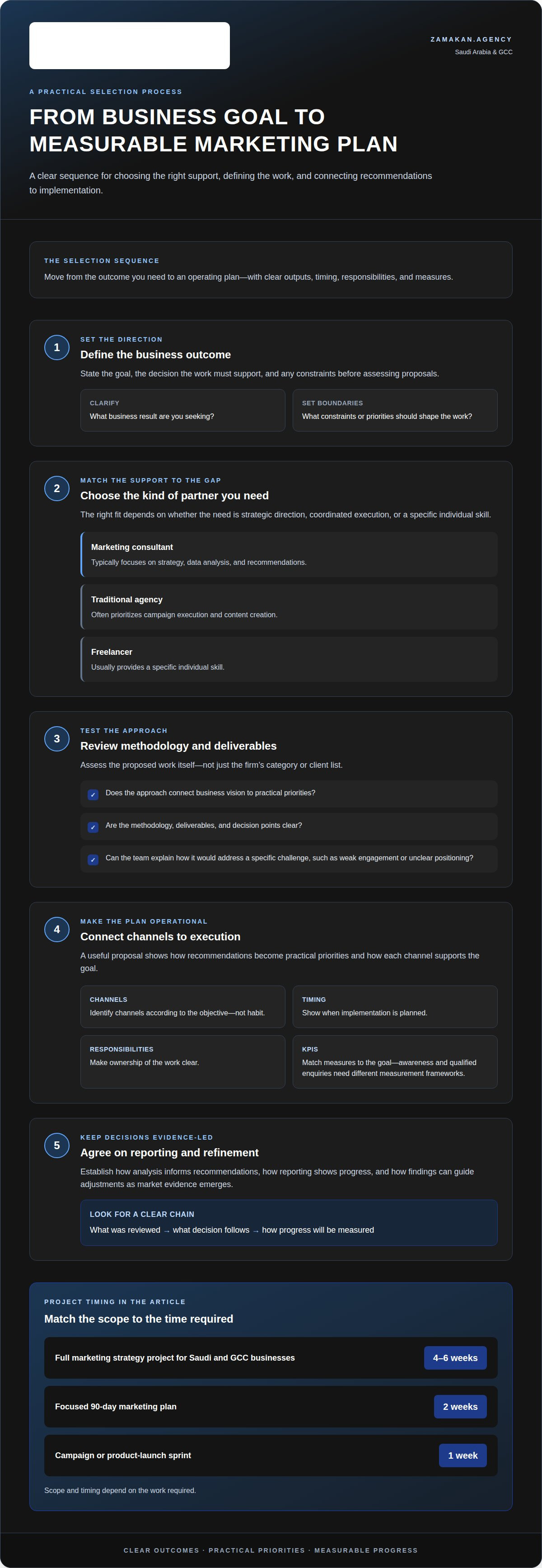
In Saudi Arabia, marketing consultants typically focus on strategy, data analysis, and recommendations. Traditional agencies often prioritize campaign execution and content creation, while freelancers usually provide a specific individual skill. The right fit depends on whether you need strategic direction, coordinated delivery, or specialist capacity.
Marketing support in Saudi Arabia ranges from specialist consultancies to broader advisory firms with marketing expertise. Scope varies, so assess the proposed work rather than relying on the firm’s category. Before starting an engagement, define the business goal, the decision the work must support, and the expected outputs.
Then assess how the proposed strategy connects business vision with practical priorities. A useful proposal identifies channels, implementation timing, responsibilities, and key performance indicators. A company seeking qualified enquiries, for example, needs a different measurement framework from one building awareness. Ask how analysis will inform recommendations and how reporting will show progress. The plan should also explain how findings can guide adjustments as market evidence emerges.
Scope and timing depend on the work required. A full marketing strategy project for Saudi and GCC businesses takes 4 to 6 weeks. A focused 90-day marketing plan takes 2 weeks to prepare, while a campaign or product-launch sprint takes 1 week. These timelines help distinguish a broad strategic engagement from a tightly defined assignment.
Use a practical selection process. First, state the desired business outcome and any constraints. Next, review the proposed methodology, deliverables, and decision points. Finally, establish how recommendations connect to implementation and ongoing measurement. This makes it easier to judge whether the engagement can turn a strategic vision into an operating plan for growth. It also gives senior leaders a shared basis for evaluating progress, refining channels, and directing resources toward the priorities that matter.
Before starting, define your marketing goals. Marketing consulting focuses on strategic planning, data analysis, and recommendations; traditional marketing agency work often centers on executing advertising campaigns and creating content.
Vision 2030’s digital transformation is opening opportunities across Saudi Arabia’s business sectors. A retailer, a hospitality group, and a professional services firm each face different audience needs. Their campaigns should reflect distinct buying journeys, customer expectations, and commercial priorities. Sector insights help connect an innovative idea to execution that fits the business.
When planning advertising and marketing in Saudi Arabia, account for applicable local requirements. Review promotional claims, creative content, and publication processes before execution. The relevant considerations depend on the campaign format and activity.
Influencer campaigns also need clear operating rules. Set expectations for the message, content approvals, audience fit, and reporting, then align the campaign with applicable local requirements before publication. This gives the business and creator a shared framework for delivery.
Digital marketing demand is rising alongside business investment in the channel. SEO/SEM, social media strategy, and paid campaigns can support different goals. A company seeking stronger visibility may prioritize search presence, while one building audience engagement may focus on social content. Choose channels according to the objective, not habit.
Arabic-language and cultural localization matter because they shape how audiences understand a message. Adapt wording, examples, and creative choices to the intended audience rather than translating campaign copy literally. Locally relevant messaging can clarify a brand’s positioning across Saudi Arabia and GCC markets.
Key risks include generic messaging, poor audience fit, and rising paid advertising costs. A campaign can also lose direction when its channels, budget, and measures are misaligned. Define the intended outcome, review audience and market insights, and use reporting to identify where execution needs to change.
Vision 2030’s digital transformation is creating new opportunities for Saudi businesses. As digital investment grows, marketing plans need to connect business goals with channel choices, implementation timelines, and performance indicators. Ongoing review helps companies respond to market evidence and refine campaigns effectively.
Marketing consultants assess a company’s current position, audience, market, and competitors, then turn their findings into recommendations and an actionable plan. In Saudi Arabia’s substantial e-commerce market, customer choices and rival offers influence how businesses position themselves. A useful audit identifies what customers value, where competitors focus, and which opportunities fit the company’s goals.
A practical audit starts by defining the decision it needs to support, such as improving product discovery or reaching a new audience segment. The analysis can then review customer needs, competitor messaging, channel activity, and the company’s current performance. An online retailer, for example, might examine its product pages and purchasing journey alongside competing offers. Findings should distinguish observed evidence from assumptions.
Market research and competitor analysis can help identify opportunities and guide strategic decisions. Consultants may assess how brands communicate their value, which themes recur across campaigns, and where customer needs appear underserved. These insights support a marketing strategy grounded in market and audience data rather than guesswork. Recommendations can then prioritize positioning, channels, and creative direction.
Advertising and marketing activity in Saudi Arabia should account for applicable local requirements. The review depends on the channel and campaign format, so assess claims, creative materials, and approvals before publication. For influencer marketing, define the commercial relationship, deliverables, message, and content review process. Clear expectations help teams manage campaign risks responsibly.
Useful audit outputs include a summary of the current position, prioritized opportunities, recommended actions, and measures for tracking progress. Periodic reviews help adapt recommendations as Saudi and Gulf markets change. A successful audit is more than a competitor inventory: it connects evidence to decisions and gives teams a basis for assessing whether execution is working.
For a focused review of your market position and next opportunities, request a marketing audit.
zamakan Agency helps businesses turn marketing priorities into a coherent direction and practical next steps. Its ADVISORY work supports strategic planning, while MEDIA and BRANDING help align channel choices and brand positioning with business goals. This support is useful when your team needs to turn market findings into an actionable strategy, clarify its message, or connect planning with execution across Saudi Arabia and the GCC.
Start with your business context: the outcomes you seek, the audiences you need to reach, and the challenges shaping current marketing decisions. Strategy and delivery can then focus on the priorities that matter to your organization.
Contact zamakan Agency to discuss your marketing priorities.
The next step is to turn a business priority into a clear decision: where to focus, what to change, and how to assess progress. Effective marketing consulting in Saudi Arabia makes that direction practical for your organization and connects strategy with execution.
zamakan Agency offers ADVISORY to shape strategic decisions, MEDIA to support channel planning, and SEO/SEM to strengthen digital performance. These services can help your team set sharper priorities and connect marketing activity more effectively. Start with a candid discussion about your objectives and the challenges currently limiting progress.
Contact zamakan Agency to discuss the next stage of your marketing strategy. A considered conversation can help clarify the path ahead and give your team a confident foundation for moving forward.
A marketing consulting company helps organizations make informed decisions about how marketing can support business objectives. It can assess an existing approach, identify strategic gaps, and turn recommendations into an execution roadmap. A business entering a new market, for example, may need to clarify its positioning and customer priorities before choosing campaign tactics. Consulting brings structure to these decisions and connects them to organizational goals.
Build the strategy with the people responsible for carrying it out. Involve key decision-makers early, clarify who owns each action, and turn priorities into tasks that fit existing workflows. A sales team, for example, can help define what makes an enquiry useful, while marketing sets measures for attracting those prospects. Shared ownership and regular progress reviews help teams understand the reasoning behind decisions and adapt execution as needed.
For marketing consulting in Saudi Arabia, choose a consultant whose approach fits your business challenge, decision process, and internal capabilities. Test their thinking against one real issue, such as unclear positioning or low-quality enquiries. A useful response explains what information informs the diagnosis, which stakeholders should contribute, and how recommendations become assigned work. Also clarify decision rights, communication expectations, and what your team must provide during the engagement.
To begin marketing consulting in Saudi Arabia, use a clear sequence to move from need to engagement:
• Define the business outcome and constraints shaping the work.
• Share relevant context, such as existing campaign materials and customer insights.
• Agree on scope, deliverables, responsibilities, and how progress will be assessed.
• Confirm the engagement and align participating teams before work begins.
This preparation gives both sides a shared foundation for decisions and execution.
zamakan Agency.


